
Steering AI video: what one celebration shot actually took
One shot in the PadX promotional reel needed far more steering than the rest of the cut. Three things moved it: describing the motion we wanted in positive, concrete terms instead of listing what to avoid, anchoring the difficult moments with reference frames, and rebuilding the neon outline rather than tweaking it.
Phil Eagle, Creative
- AI video
- Creative
- PadX
Most of the reel came together without much of a fight. The celebration did not. It is a simple beat on paper, a player turning to face the camera and waving, and it took more steering than everything around it put together. Almost all of that steering came down to how the motion was described rather than how many attempts it was given.
The model kept taking anatomical shortcuts
Getting the celebration shot right meant fighting the model's habit of taking anatomical shortcuts. It craned the player's head backwards instead of turning his body to face the camera. It sent his gaze skyward rather than meeting the lens. At one point it detached the waving hand entirely.
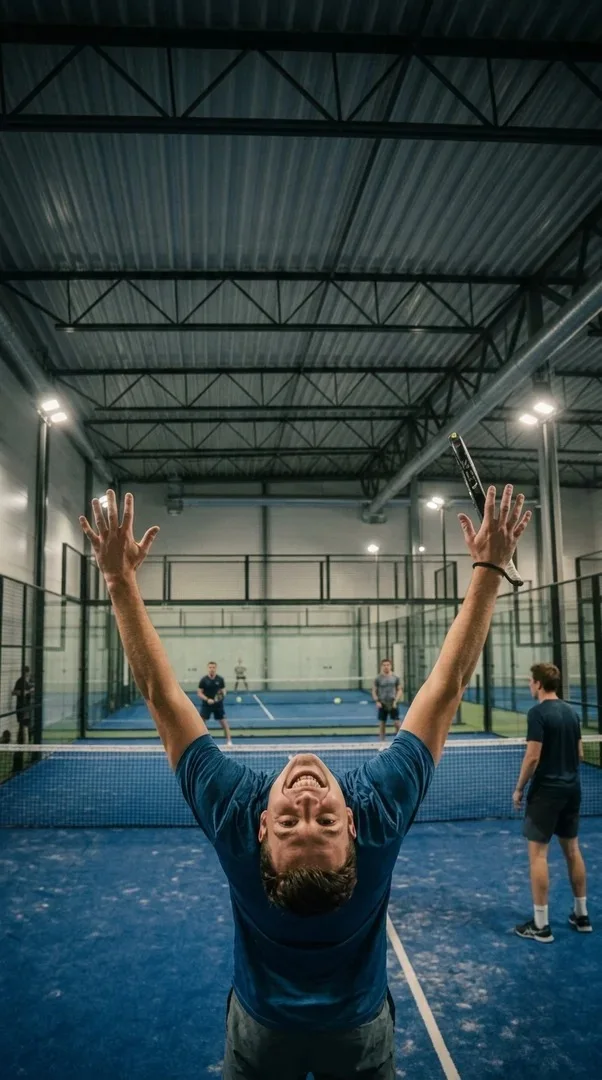
The instinct is to write the fault straight into the next attempt: do not crane the neck, do not look up, keep the hand attached. That works far less well than it sounds like it should. A list of things to avoid gives the model nothing to aim at, and it will happily find a new way to be wrong that nobody thought to prohibit.
Each fix came down to describing the motion we did want in positive, concrete terms rather than telling the model what to avoid. Not an absence to respect, but a movement to perform: the shoulders coming round, the body turning to face the camera, the eyes finding the lens.
Wording alone did not carry the hardest beats. Anchoring the trickier moments with reference frames gave the phrasing something solid to hold onto, so the description was working against a fixed picture instead of an open question.
The neon outline was its own problem
The outline was a separate challenge with its own failure modes. Early versions flickered. They broke apart around the fingers. They dropped the racket whenever it swung out, which is precisely the moment the outline is most visible and least forgiving.
It took a few rebuilds to get to a clean, continuous glow that stays locked to the player even mid-celebration. That is the part worth flagging for anyone attempting something similar. An effect that has to track a moving subject rarely comes good through small adjustments. Once it is breaking at the edges it tends to keep breaking at the edges, and rebuilding is quicker than nudging.
What I would carry into the next one
- Describe the motion you want in concrete physical terms. Negative instruction gives the model nothing to perform.
- Anchor the difficult moments with reference frames, so the wording has something solid to hold onto.
- When an effect has to track a moving subject, rebuild it rather than tweak it. Breakage around the fingers and the racket did not tune out.
AI did a lot of the heavy lifting throughout, but getting it this polished took a fair bit of iteration to steer it right.
I am really pleased with how the final shot looks given everything that had to be wrangled to get there. The lifting was done for me. The directing was not.